

- Details

WCRP is looking forward to participating in the American Geophysical Union (AGU) Fall Meeting 2022, to be held from 12 to 16 December 2022 in Chicago (USA).
The list of WCRP sessions is available here.
Do not miss the abstract submission deadline: 3 August 2022
- Details

The WCRP Digital Earths Lighthouse Activity and Earth System Modelling and Observations (ESMO) Core Project are jointly convening a workshop to bring together all relevant communities interested in ultra-high-resolution modelling. The workshop is planned to be in person from October 3-7, 2022 at the National Center for Atmospheric Research (NCAR) in Boulder, CO, U.S.A. Public health regulations permitting.
Abstract submissions and registrations are open for the workshop “Modelling the Climate System at Ultra-High-Resolution: Resolving atmospheric storms, ocean sub-mesoscale eddies, rivers and glaciers”.
Deadlines:
- Abstract submissions: 31st August
- Registrations: 19th September
To know more about the workshop and to submit an abstract and register, click here
- Details

Climate model data has been increasing progressively over the past decades. This is leading to a shift towards data-intensive activities in climate sciences which in turn is posing challenges for the current generation such as striking a balance between time expended in data-intensive and other foundational climate science activities. The Young Earth System Scientists community (YESS) invites you to fill in a form, which will help to know your perspective on these growing data-intensive activities in climate sciences and what YESS can do to help early-career researchers (ECRs) achieve this balance.
- To know more and fill in the form, click here.
- Details
Details of the regional simulations/downscalings of CMIP6 that are planned for each domain can be accessed via https://wcrp-cordex.github.io/simulation-status/
The simulations status is listed as :
- Full list of simulations
- Summary by domain
- Summary by scenario
- Summary by experiment
This platform will be a living site and evolve as simulations are completed, status changed or new simulation plans are added. To keep this alive, the CORDEX Project Office is requesting contributions from the community by adding or updating the simulations available.
For more information, the CORDEX Project Office can be contacted at
- Details

The Past Global Changes (PAGES) project is pleased to announce the 2nd volume of its new paleoscience magazine for teenagers, young adults, and people of all ages interested in Earth’s history.
This new issue shows how some warm periods occurred in the past, and the challenging adaptations that Earth and humanity had to undergo to cope with climate change impacts. In addition, it stresses how past warm time intervals were different from the one we are living today, and what it may mean to adapt this time.
- Details
The Surface Ocean–Lower Atmosphere Study (SOLAS), an international and interdisciplinary research project on biogeochemical-physical air-sea interactions and processes will hold its 8th SOLAS Open Science Conference on 25-29 September 2022 in Cape Town, South Africa (hybrid format).
- The deadline for abstract & discussion session proposal submission, and travel fund application is 10th June 2022 ;
- The deadline for Early Career Scientist Day (ECSD) application is 25th July 2022;
- The deadline for early bird registration is 31st July 2022.
- To learn more, visit the 8th SOLAS Open Science Conference website
- Details
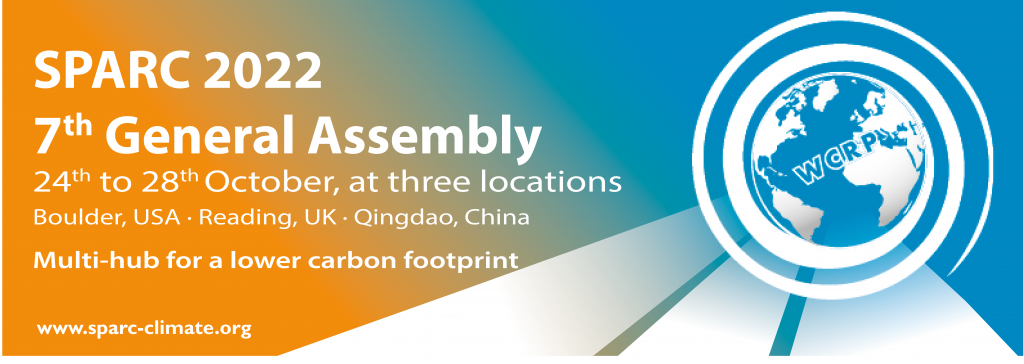
SPARC (Stratosphere-troposphere Processes And their Role in Climate) is holding its 7th General Assembly (GA) from 24th to 28th October 2022. The format of the SPARC GA will be different from past GAs, as it will be on a multi-hub basis with three locations (hubs) confirmed at the National Center for Atmospheric Research (NCAR), in Boulder, USA, the European Centre for Medium-Range Weather Forecasts (ECMWF), in Reading, UK, and the First Institute of Oceanography (FIO) in Qingdao, China.
- Deadline for abstract submission extended to 5 pm UTC on 6 June 2022
- For more information and submissions, visit the conference webpage.
- Details
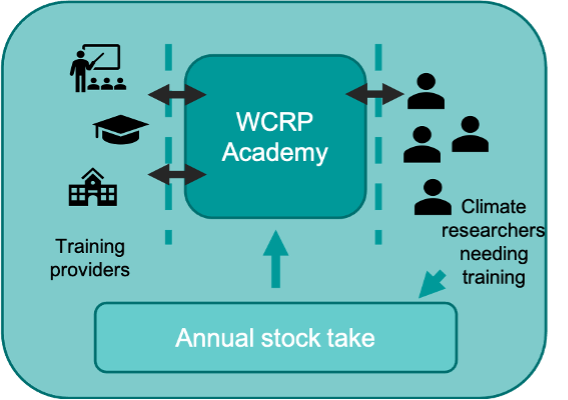
A reminder that the WCRP Academy currently has an open call for nominations to its Steering Group. The WCRP Academy Steering Group is responsible for the implementation of the Academy's science plan, its overall direction and services, as well as resource allocation. Full details are provided on the Academy webpages. The deadline is 31 May 2022.
- Details
A reminder that the deadline for nominations for membership of the WCRP Joint Scientific Committee (JSC) will close on 31 May 2022. We invite all interested candidates to read more about the important role that JSC members play and access the nomination form on the open call webpage.
- Details
We are fast approaching the abstract submission deadline for the 6th WGNE Workshop on Systematic Errors in Weather and Climate Models hosted by the European Centre for Medium Range Weather Forecasts (ECMWF), in Reading (UK) on 31 October - 4 November 2022. The workshop will bring together a wide range of experts on simulating the Earth System including atmosphere, ocean, waves, land-surface, atmospheric composition, cryosphere, and associated disciplines to advance the understanding of systematic simulation errors at all timescales.
Early career researchers from selected countries will be able to enter a competition for best abstracts for oral presentations. The World Meteorological Organization (WMO) is pleased to offer funding for travel to ECMWF (UK) to the winners of the competition. Please see https://events.ecmwf.int/event/241/page/122-abstract-competition for details.
- Abstracts are due 31 May 2022
- To know more about the workshop, click here.
- Details
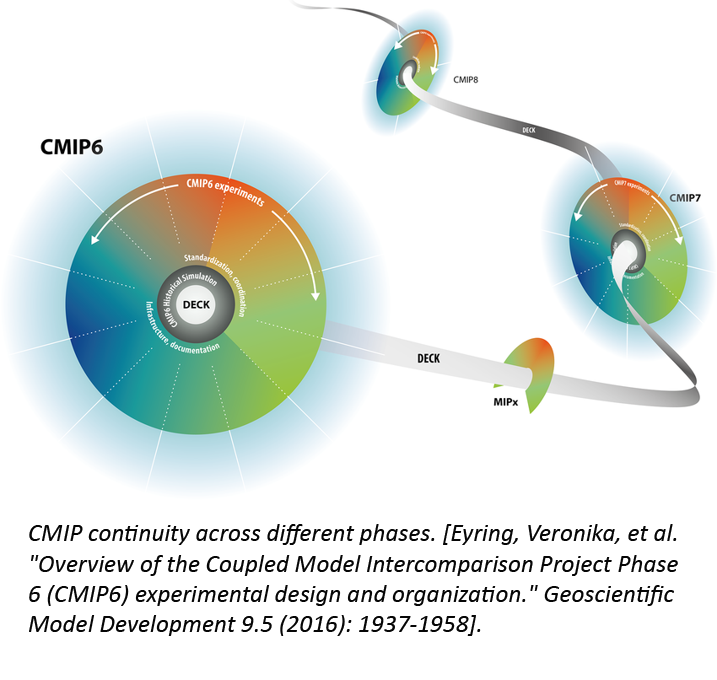
Today, CMIP is highlighted at the ESA’s Living Planet Symposium 2022 where CMIP’s evolution, its continued policy decision support, and the challenges and opportunities at the interface of the Earth Observation and modelling communities will be discussed.
To learn more, click the heading above.
- Details
- Details

- To read more. click here.
- To read more, click here.
- Details
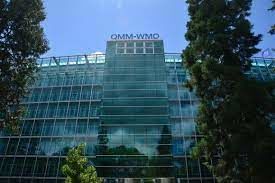
WCRP is seeking an intern, commencing 1 September 2022 for a period of 12 months, in Geneva, Switzerland. The deadline for applications is 31 May 2022. For further information and to apply, click the heading above.
- Details
- To read the article, click here.
- Details
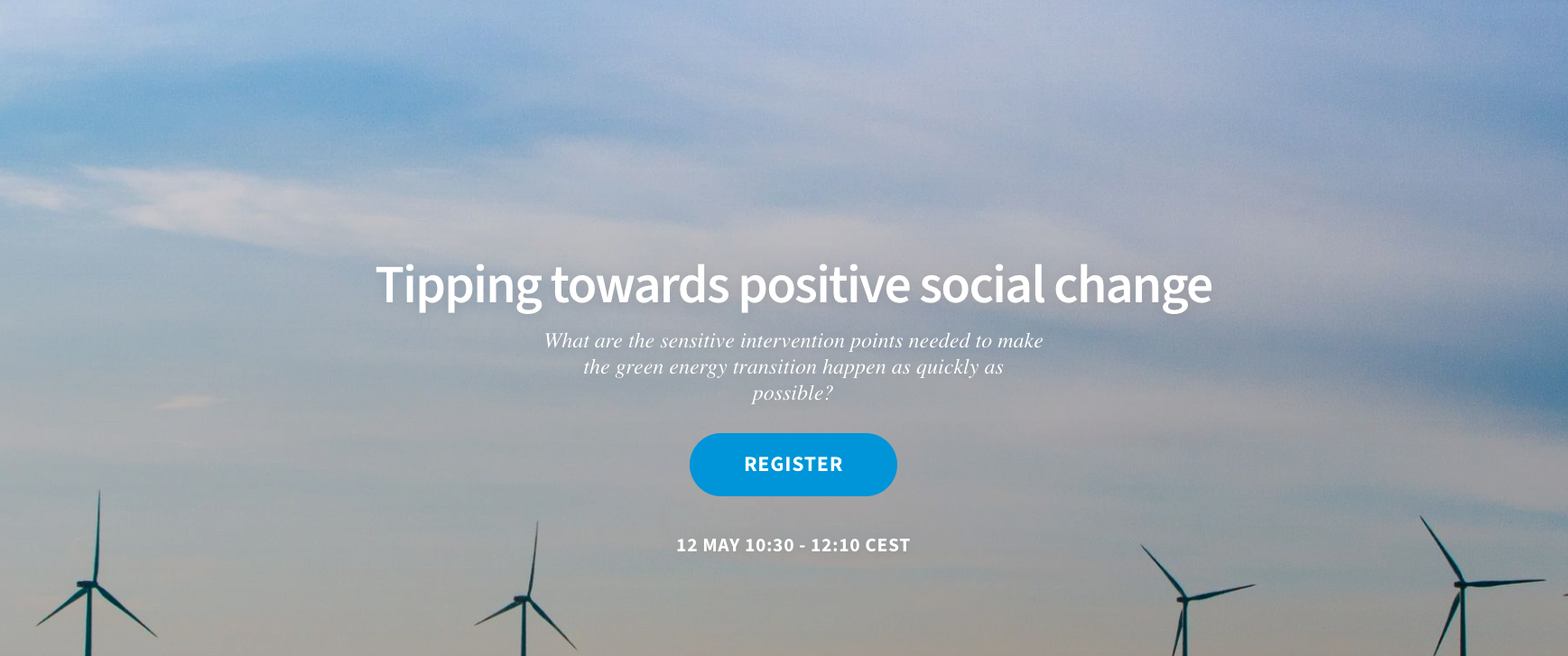
We warmly invite you to attend the next webinar in the 'Tipping elements, irreversibility, and abrupt changes in the Earth system' Discussion Series. On 12 May 2022 at 10:30 CEST, we will explore tipping towards positive social change with two talks:
- Social tipping dynamics – Ilona Otto (University of Graz)
- What are the sensitive intervention points needed to make the green energy transition happen as quickly as possible? – Doyne Farmer (University of Oxford)
To register, please see the Discussion Series website.
- Details
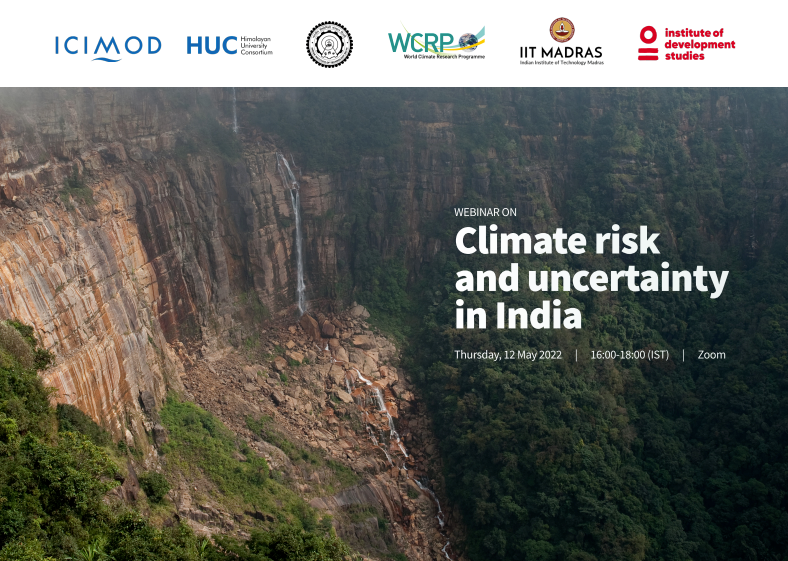
The first WCRP My Climate Risk Lighthouse Activity Hub Webinar will take place on 12 May 2022 (16:00 IST, 12:30 CEST), organized by the Regional Hub for the Hindu Kush Himalaya under ICIMOD’s Himalayan University Consortium (HUC) and investigating the gap between global models and local decision-making, especially in the context of 'uncertainty'. To find out more, click the heading above.
- Details
The second Model Hierarchies workshop will be held 29 August - 1 September 2022, as a 3.5-day in-person (covid permitting) workshop at Stanford, CA (USA). As last time, we solicit talks on the design and use of modeling hierarchies in all aspects of Earth system science, covering the major climate system components -- atmosphere, ocean, land, cryosphere, biosphere -- but this time also underline our interest in exploring the ways in which such models are connected to the downstream uses of this data in the study of climate impacts. The workshop will be structured around talks in a single-session format, interspersed with poster sessions during the recesses. There will be plenty of time in between sessions for collaborative and social discussion.
- Deadline for abstract submission and application for financial support is extended to 15 May 2022, don't miss the date!
- To visit the workshop website and to register and submit your abstract, click here
- Details
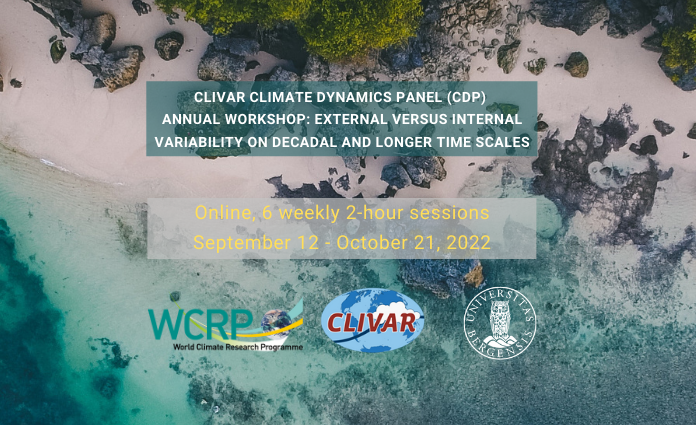
The International CLIVAR Climate Dynamics Panel (CDP) plans to organize workshops annually. The first CDP annual workshop will target our understanding of internal and externally forced variability in the climate system, their interaction on decadal timescales and longer, and the effects of variability on extreme events. We invite submissions on the topic with the aim of tackling the following overarching questions:
- How to isolate the relative contributions of external and internal variability to observed decadal and longer variability?
- How do the various external forcings modulate internal variability?
- Progress in narrowing observational and modeling uncertainties in external and internal variability
- Effects of external and internal variability on extreme events
The workshop will consist of 6 weekly 2-hour sessions from September 12th to October 21st, 2022, including 4 oral sessions, 1 poster session and 1 final panel discussion.
- Abstract submission deadline: June 24, 2022
- Registration deadline: September 1, 2022
- To know more and register, visit the event website
- Details
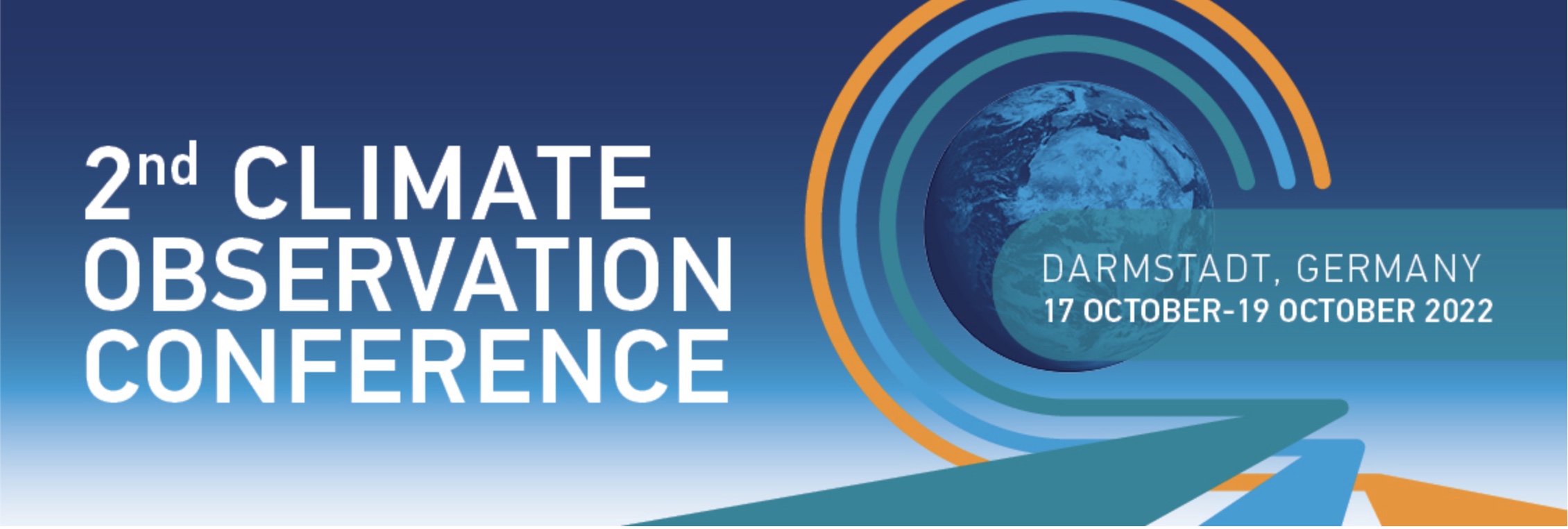
The second GCOS Climate Observation Conference (17-19 October 2022, Darmstadt, Germany) will focus on activities and solutions that help to achieve a fully implemented, sustainable, and fit for purpose global observing system for climate. The Conference will also provide the occasion to celebrate GCOS 30th Anniversary and take stock of the progress achieved by the global observing community in the last three decades. The Conference will be in person, even though hybrid options will be made available too.
Abstracts can be submitted online for either an oral or poster presentation. The abstract submission deadline is 1 June 2022: only 6 weeks left!
- Deadline for registration: 23 September 2022
- For more information, please visit the conference website
- Details
The second Model Hierarchies workshop will be held 29 August - 1 September 2022, as a 3.5-day in-person (covid permitting) workshop at Stanford, CA (USA). As last time, we solicit talks on the design and use of modeling hierarchies in all aspects of Earth system science, covering the major climate system components -- atmosphere, ocean, land, cryosphere, biosphere -- but this time also underline our interest in exploring the ways in which such models are connected to the downstream uses of this data in the study of climate impacts. The workshop will be structured around talks in a single-session format, interspersed with poster sessions during the recesses. There will be plenty of time in between sessions for collaborative and social discussion.
- Deadline for abstract submission and application for financial support : 30 april 2022
- To visit the workshop website and to register and submit your abstract, click here
- Details
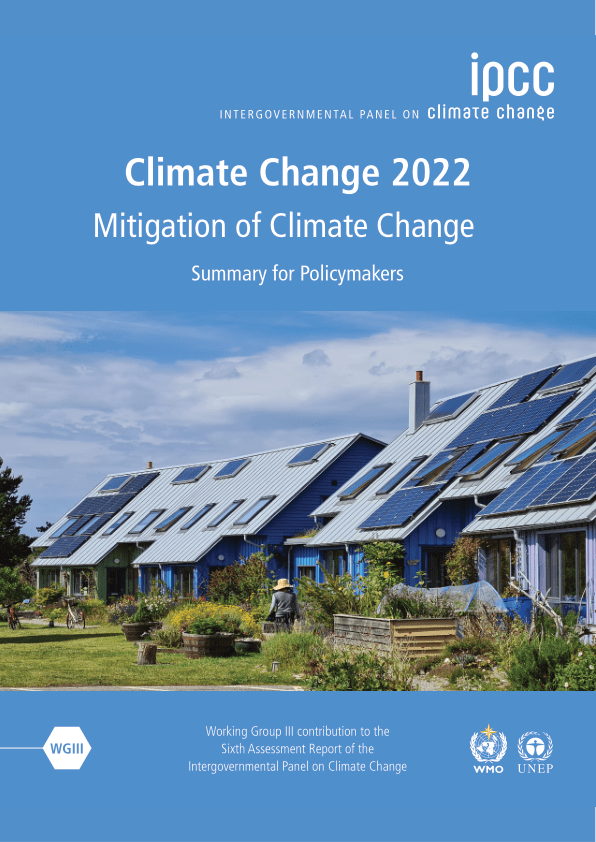
We are delighted that the Summary for Policymakers of the IPCC Working Group III report, Climate Change 2022: Mitigation of climate change was approved on April 4 2022. This is a massive undertaking, incolving 195 member governments of the IPCC, through a virtual approval session that started on March 21. It is the third instalment of the IPCC’s Sixth Assessment Report (AR6) and it makes clear that there are options in all sectors to halve emissions by 2030 but that this depends on major shifts in a number of key sectors including the energy and industry sectors. The report also makes it clear that the next few years are critical and that clear signalling from governments and the international community, including a stronger alignment of public sector finance and policy, will be required to effectively mitigate and adapt to climate change impacts - which is critical to sustainable development.
- Details
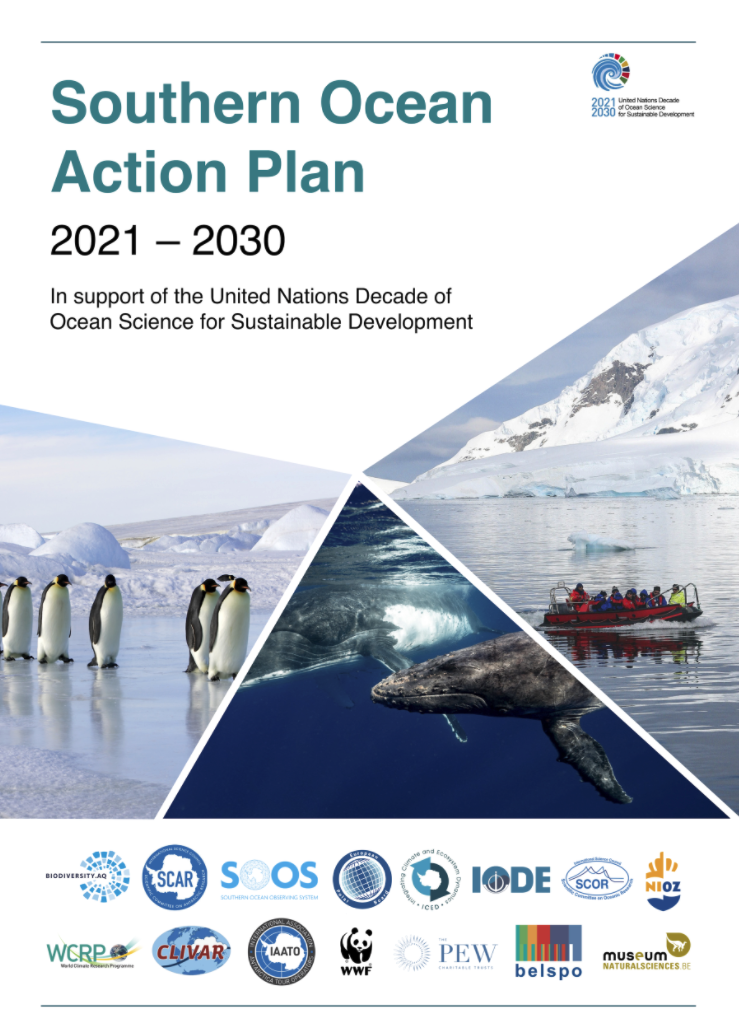
The Southern Ocean Action Plan will be launched on 12 April 2022 at 12:00 UTC. The launch event will present the content of the Action Plan and the future of the Southern Ocean community’s engagement in the United Nations Decade of Ocean Science for Sustainable Development. The Action Plan aims to mobilise the Southern Ocean community and inspire stakeholders to seek engagement and leverage opportunities to deliver innovative solutions that maintain and foster the unique conditions of the Southern Ocean. This framework provides an initial roadmap to strengthen links between science, industry, and policy, as well as to encourage internationally collaborative activities in order to address existing gaps in our knowledge and data coverage. You can find out more on the event page.
- Details
The second GCOS Climate Observation Conference (17-19 October 2022, Darmstadt, Germany) will focus on activities and solutions that help to achieve a fully implemented, sustainable, and fit for purpose global observing system for climate. The Conference will also provide the occasion to celebrate GCOS 30th Anniversary and take stock of the progress achieved by the global observing community in the last three decades. The Conference will be in person, even though hybrid options will be made available too.
- Deadline for abstract submission: 1 June 2022
- Deadline for registration: 23 September 2022
- For more information, please visit the conference website
- Details
The WCRP Working Group on Numerical Experimentation (WGNE) organises a hybrid workshop on systematic errors in weather and climate models, hosted by the European Centre for Medium Range Weather Forecasts (ECMWF), in Reading (UK) on 31 October - 4 November 2022. The workshop brings together a wide range of experts on simulating the Earth System including atmosphere, ocean, waves, land-surface, atmospheric composition, cryosphere, and associated disciplines to advance the understanding of systematic simulation errors at all timescales.
Early career researchers from selected countries will be able to enter a competition for best abstracts for oral presentations. The World Meteorological Organization (WMO) is pleased to offer funding for travel to ECMWF (UK) to the winners of the competition. Please see https://events.ecmwf.int/event/241/page/122-abstract-competition for details.